
What does it take to become a diplomat in a world shaped by conflict, migration, climate change, and cultural differences? For Eduardo Urbina, diplomacy begins with something both simple and demanding: the ability to listen, understand different perspectives, and build bridges between people.
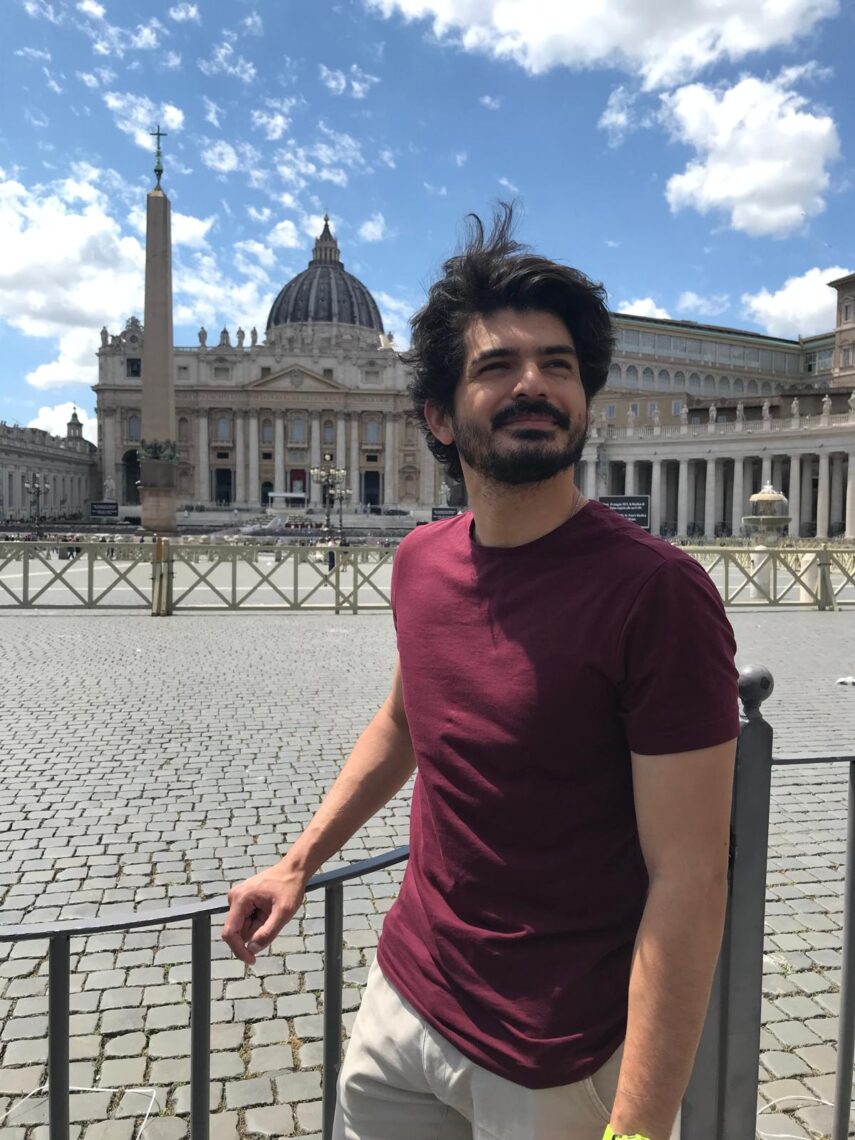
Born and raised in Honduras and shaped by both his Central American roots and his Sicilian family background, the 29-year-old Political Science and International Relations student at the University of Perugia has experienced cultural diversity as a natural part of his life. Travelling, living abroad, and encountering different ways of thinking sparked an early interest in international affairs and eventually led him towards the field of diplomacy.
Eduardo sees diplomacy not merely as a profession, but as an art: the art of communication, negotiation, and finding common ground in a complex world. In his view, every country represents a piece of a much larger puzzle — different in shape and perspective, yet essential to the whole.
In this interview with firstlife, Eduardo speaks about the experiences that inspired his interest in diplomacy, the skills future diplomats need, the importance of dialogue in addressing global challenges, and why diplomacy ultimately goes far beyond political negotiations: it is also about empathy, dignity, trust, and our ability to live together peacefully across borders.
Can you introduce yourself and tell us a little about your background?
My name is Eduardo Urbina. I was born and raised in Central America in Honduras. I have Sicilian background from my maternal family, which means I grew up with a strong focus on food, family, and direct communication from both sides of my family.
I am 29 years old, and I am currently studying Political Sciences and International Relations at the University of Perugia in Italy.
What first sparked your interest in international affairs and diplomacy?
My interest in diplomacy first started because living in a multi-ethnic country taught me how to listen, adapt, and communicate across differences.
Because I was exposed to so many different mindsets and cultural perspectives from a young age through my travels and experiences, I learned to stay neutral. It helped me build a balanced, open-minded way of seeing the world and understanding it better. Over time, this led me to choose the political and diplomatic field for my studies.
Was there a specific moment, event, person, or experience that inspired you to consider becoming a diplomat?
The moment I knew I was interested in diplomacy was during my sophomore year when I lived near Miami in the period 2012–2013. There, I gave a speech in the city library as part of a student activity on Martin Luther King Jr.’s quotes on freedom and human rights. That experience made me realize I was passionate about international politics, history, and the people who work to give others a voice across borders.
If you could describe diplomacy in just three words, what would they be and why?
I would describe diplomacy in these three words: art, negotiation, and world.
Art because diplomacy is the art of communication and expression.
Negotiation, because it’s about finding solutions between two or more sides.
World, because diplomacy is about everything that happens between countries, from words and dialogue to peace treaties.
What excites you the most about the idea of representing your country or organization internationally?
What excites me the most about representing my country or an organization is the honor of being the voice of many people on an international stage. Whether it’s through diplomacy, culture, or international events, it’s a huge responsibility and privilege.
I see the world like a big puzzle. Every country is a piece. If a piece is missing, the world is not complete. So, every piece matters. When we put all the pieces together, we create something bigger:
A work of art. That’s the world we live in.
So, the idea of helping my country be a meaningful piece of that puzzle really excites me.
What role can diplomacy play in solving global challenges such as climate change, migration, poverty, or conflict?
The main role of diplomacy in addressing global challenges is to create dialogue and cooperation. No single country can solve problems such as climate change, migration, poverty, or conflict by itself.
Diplomacy provides the framework through which countries sit at the same table, talk, and reach agreements. A clear example is the Paris Agreement on climate change, adopted in 2015.
Through negotiation and mediation, diplomats work to prevent wars before they start and to restore peace when conflicts have already begun. Without diplomacy, problems tend to escalate.
In this sense, diplomacy turns individual national problems into shared solutions. It is the main tool we have to cooperate instead of compete.
Furthermore, political leaders are increasingly recognizing that their own interests are connected to global stability. Less war means more stability. Less poverty means more trade. Less climate damage means fewer refugees. Therefore, diplomacy links national interests to the global good.
If you could travel back in time and witness one famous diplomatic moment, which would it be and why?
If I could travel back in time, I would choose to witness the signing of the Treaty of Versailles in 1919.
I think this moment is important because it marked the beginning of modern multilateral diplomacy. For the first time, representatives from many countries came together to negotiate an agreement to end World War I and to build a new system for international peace.
This conference also led to the creation of the League of Nations, the first international organization designed to maintain world stability and prevent future conflicts.
Of course, new conflicts did start in the following years, and the League was not able to prevent World War II. However, the Treaty of Versailles was still the first major international treaty aimed at maintaining global peace and it laid the foundation for the diplomatic system we have today.
What skills are essential for young people who want to work in diplomacy?
In my opinion, young people who want to work in diplomacy need both technical skills and personal qualities.
Technical skills could include, for example, language proficiency, negotiation ability, and public speaking.
However, beyond these skills, I believe that values and mindset are even more important.
First, respect for others and admiration for different cultures are essential. A diplomat must be open to diversity and able to understand different points of view.
Second, young diplomats must be willing to adapt, change, and improve. They should be open to learning about other people, countries, conflicts, and global issues.
Finally, the most important goal is not only to become better professionals, but also to become better human beings.
Diplomacy requires empathy, patience, and the ability to build trust between people and nations.
Can diplomacy be taught or is it something people are naturally gifted at?
In my opinion, diplomacy can absolutely be taught, just like any other field of study.
With time, effort, and training, people can learn the necessary skills to become good diplomats. This includes negotiation, communication, and understanding international relations.
At the same time, I also believe that some people are naturally gifted with qualities that help in diplomacy. Just like in sports or in the arts, some people are born with a talent for empathy, patience, and understanding others.
However, even natural talent is not enough on its own. Diplomacy requires passion, continuous learning, and practice. So I would say it is a combination of both: natural qualities and education.
Complete the sentence: “Diplomacy matters because…”
Diplomacy matters because we live in a complex world with many international issues, shaped by different cultural and political perspectives where mediation is needed.
It helps us find common and respectful ways to resolve conflicts, create stability, and maintain economic balance. Ultimately, diplomacy aims to help nations and their citizens live in peace, with honesty, dignity, and respect for human rights.
Eduardo Urbina’s perspective on diplomacy is ultimately one of connection. In a world where political interests, cultural identities, economic challenges, and international conflicts often collide, diplomacy creates a space in which differences do not necessarily have to become divisions.
His image of the world as a puzzle captures this idea particularly well: every country brings its own history, culture, interests, and voice, but no single piece can create the full picture alone. Diplomacy, then, is about finding ways to bring these pieces together — not by erasing their differences, but by creating dialogue between them.
For young people considering a future in international affairs, Eduardo’s message is equally clear: languages, negotiation skills, and political knowledge matter, but they are only part of what makes a good diplomat. Empathy, patience, curiosity, adaptability, and respect for other cultures are just as essential.
Perhaps this is why diplomacy remains so important today. At its best, it is more than the negotiation of treaties or the representation of national interests. It is the continuous effort to build bridges where there are divides, to replace confrontation with communication, and to create the conditions in which people and nations can coexist with dignity and mutual respect.
And in a world that often seems increasingly fragmented, the ability to keep talking to one another may be one of the most important forms of leadership we have.




 Die GEAS-Reform: Mehr Abschottung oder ein gerechteres Asylsystem?
Schreibe einen Kommentar